There’s a moment in every cautionary tale where you can pinpoint exactly where it went wrong.
For Ford, it wasn’t the decision to embrace AI. It was leaning on automation before the judgement layer was ready to catch what it missed.
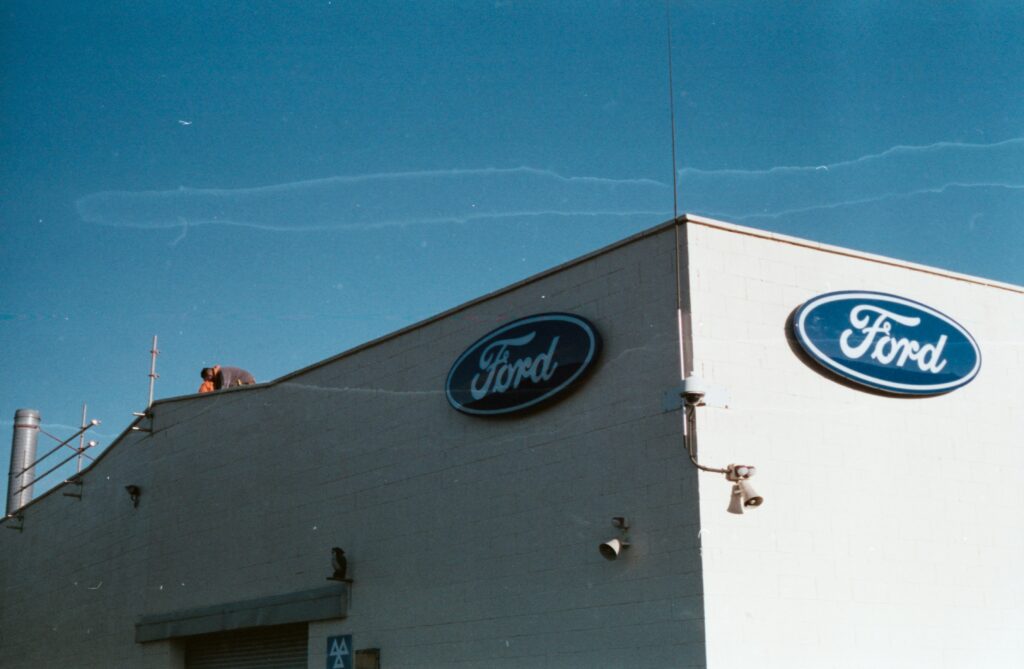
Over the past three years, Ford has hired back 350 veteran engineers, many of them former employees, after its AI-driven quality systems failed to catch the defects experienced staff would have spotted. Ford calls them “gray beard” engineers internally. The company’s own VP of vehicle hardware engineering, Charles Poon, put it plainly: Ford had mistakenly believed that introducing AI and feeding it design requirements would be enough, on its own, to produce a high-quality product. It wasn’t.
If you’re a business owner watching this unfold, the instinct might be to think “well, that’s Ford’s problem, not mine.” But the lesson underneath the headline applies to businesses of every size, including yours.
The Mistake Wasn’t Adopting AI. It Was Skipping the Judgement Layer
Every new piece of technology arrives promising to make experience less necessary. The internet, mobile, SaaS – each one supposedly meant you could get by with less seasoned people, because the tool would do the thinking for you.
AI is different, and this is the part a lot of leaders have got backwards. AI doesn’t remove the need for judgement. It rewards it. The people who get the most out of AI aren’t necessarily the ones with the least experience, they’re the ones who understand the problem well enough to know when the AI’s answer is right, when it’s almost right, and when it’s confidently wrong.
To be clear about what actually happened at Ford: the company isn’t walking away from AI. It’s still central to their operations. What changed is that Ford brought experienced engineers back in specifically to catch what the automated systems were missing, and to reprogram those AI tools so they perform better. In other words, Ford’s fix wasn’t “less AI.” It was “more experienced judgement sitting alongside the AI.” That distinction matters, because it’s a training and structuring problem, not a technology failure.
Why “Give It Time” Isn’t a Strategy
There’s a seductive argument doing the rounds in boardrooms: AI is improving so fast that today’s limitations won’t matter next year, so it’s fine to lean hard on automation now and let the tool catch up later.
Ford’s own numbers are a useful reality check here. Even with 350 experienced engineers now back in the mix, retraining younger staff and fixing the AI tools, Ford is still the most recalled automaker in America and expects $1 billion in warranty and materials costs this year. The company’s leadership frames the recall figures as a lagging indicator that should improve as more vehicles are built under the new approach. That’s a fair point, but it also shows this wasn’t a quick fix. It’s taken three years of rebuilding the judgement layer to get quality trending the right way.
The businesses who come out ahead in this next stretch won’t be the ones who avoided AI, and they won’t be the ones who deployed it without the people in place to catch its mistakes. They’ll be the ones who trained their teams to sit in the middle: using AI to move faster, while keeping the judgement to catch what it gets wrong, from the start rather than three years and a costly correction later.

This Is Exactly the Gap CPD-Accredited AI Training Is Built to Close
At Rocketeer Orbit, we call this AI Judgement, and it’s the difference between a team that plays with AI tools and a team that leads with them.
Our CPD-accredited training doesn’t hand your staff a chatbot and hope for the best. It builds the four capabilities Ford’s story shows every business now needs:
- Spotting high-margin opportunities – knowing where AI actually moves the needle on your bottom line, instead of chasing whatever looks impressive in a demo.
- Running zero-disruption pilots – testing AI in a sandbox, so mistakes get caught before they reach your customers, your product line, or your reputation.
- Tracking hard-data performance – replacing “it feels faster” with actual numbers, so you know if AI is genuinely saving you time and money, or just moving the cost somewhere less visible.
- Communicating strategically – giving your team the language to explain AI decisions to you, your board, or your clients in terms of business value, not just technical novelty.
This is the kind of training that closes the gap Ford’s story illustrates.
Not because it makes AI perfect, but because it makes the people using it sharp enough to know when it isn’t, before that gap turns into three years and hundreds of millions of dollars worth of correction.
The Real Lesson for Business Owners
Ford’s story isn’t a warning against AI. It’s a warning against deploying it without the people in place to catch what it gets wrong.
You don’t need to choose between “keep everyone doing things the old way” and “replace everyone with AI.” There’s a third option, and it’s the one Ford itself landed on after three expensive years: train your existing team to combine their experience with AI’s speed, so you get both the judgement and the productivity gain, without waiting for a costly correction to force the issue.
The businesses that build this in now will be the ones setting the pace in a year.
The ones that don’t may find themselves running the same experiment Ford just ran, at their own expense.
Want your team to lead with AI instead of just playing with it? Explore our CPD-accredited training options and find the delivery model that fits your business.
Leave a Reply